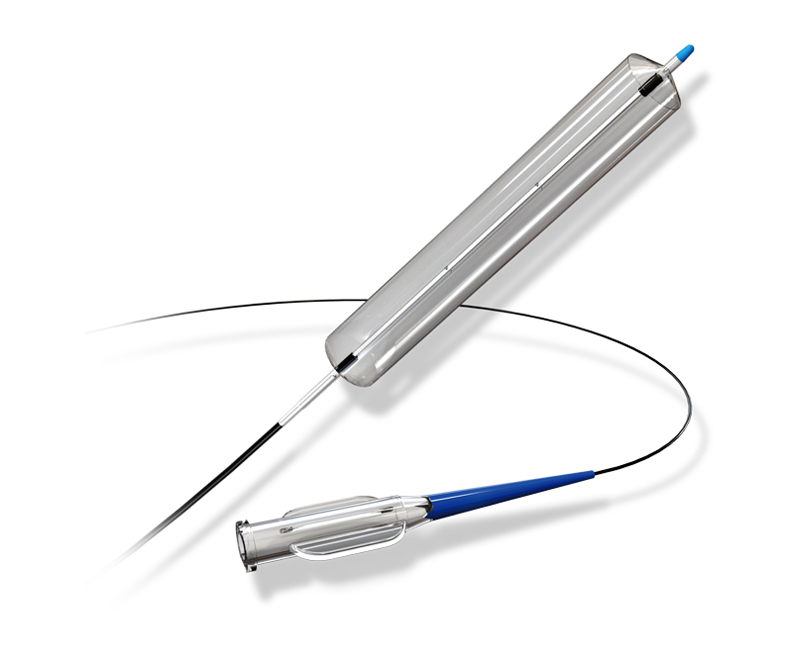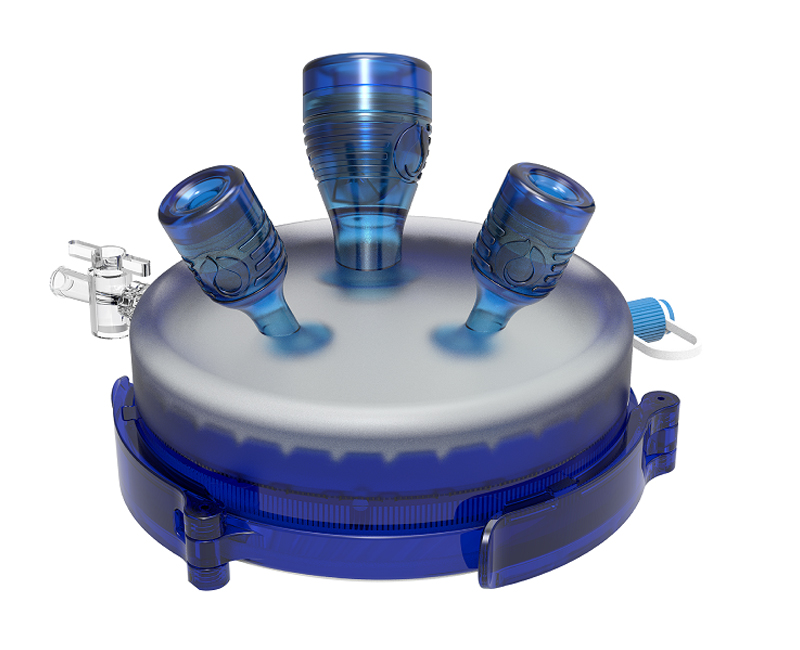

An incision protector is a type of surgical instrument placed inside a surgical incision to cover the incision edges, isolate tissue contact, and maintain the operating channel. Some products can also apply continuous tension around the incision through the ring and flexible film, thus having the function of tissue retraction.
In the product name, Wound Protector emphasizes covering and protecting the incision edges, while Wound Retractor emphasizes tissue retraction and surgical field exposure. Actual products may perform both functions simultaneously, and therefore are often referred to as incision protection retractors. When purchasing, one cannot judge the use solely based on the product name; the number of rings, length of the film, applicable incision range, tissue thickness, and expected surgical scenarios should also be verified.
The difference between an incision protector and an incision retractor primarily lies in whether the product design focuses more on incision coverage or on tissue retraction and surgical field maintenance.
Incision protectors usually use a ring and cylindrical film to cover the incision channel formed by the skin, subcutaneous tissue, and fascia, reducing direct contact between the incision edges and instruments, specimens, or cavity contents. Incision retractors, on the other hand, keep the incision open by applying tension around it, providing space for observation and instrument operation.
In actual products, these two functions are often combined. Double-ring products usually consist of an inner ring, an outer ring, and a flexible film sheath connecting the two. The inner ring is placed inside the body cavity, while the outer ring remains outside the incision; by rotating or winding the outer ring, the film sheath gradually conforms to the incision channel and forms circumferential retraction. The relevant device documents published by the US FDA also describe such devices as being usable for retracting the incision, protecting the incision edges, and establishing an operating channel for cavity surgery.
Therefore, Wound Protector and Wound Retractor are not always mutually exclusive product categories. For surgeries requiring both incision edge coverage and operation space maintenance, the product structure and intended use should be verified, rather than just comparing names.
The main differences between single-ring and double-ring incision protectors lie in the number of rings, fixation method, channel adjustment ability, and incision coverage range.
A single-ring structure usually consists of one ring and a protective film, relying on the fit between the ring and the tissue around the incision to maintain its position. Its structure is relatively simple, with usually fewer installation steps, making it suitable for incision protection scenarios with limited retraction adjustment requirements.
The double-ring structure has rings set inside and outside the incision, connected by a flexible film in the middle. The inner ring provides support inside the body cavity, while the outer ring is located outside the incision. By winding the outer ring, the length of the film between the inner and outer rings can be adjusted to adapt to different tissue thicknesses, forming relatively uniform tension around the incision.
| Comparison Item | Single-ring Incision Protector | Double-ring Incision Protector |
| Basic Structure | Single ring with protective film | Inner ring, outer ring, and connecting film |
| Fixation Method | Mainly depends on ring fit with the incision | Inner ring fixed, outer ring wound to adjust |
| Channel Height Adjustment | Usually limited | Adjustable by winding the outer ring |
| Retraction Function | Depends on ring structure and installation state | Usually forms circumferential retraction |
| Incision Coverage | Covers part or all of the incision edges | Film can cover the entire incision channel |
| Installation Focus | Ring size and fixation stability | Inner ring expansion, film fit, and outer ring tension |
| Procurement Focus | Ring diameter, film size | Inner and outer ring size, film length, and applicable tissue thickness |
A double-ring structure does not necessarily suit all surgeries. A model that is too large may not fit stably with the incision, while a model that is too small may cause installation difficulties, insufficient retraction space, or localized stress concentration. Selection should be based on the applicable incision range specified in the specific product manual.
In abdominal surgery, incision protectors are mainly used for covering, retracting, and maintaining the channel for open incisions, laparoscopic-assisted incisions, and specimen removal incisions.
In open abdominal surgery, incision protectors can cover the incision channel formed by the skin, subcutaneous tissue, and fascia, and help keep the incision open. For surgeries involving the gastrointestinal tract, biliary tract, or other body cavity contents, the flexible film can also form a physical barrier between the incision edges and the surgical area.
The World Health Organization's guidelines for the prevention of surgical site infections suggest that incision protectors may be considered for clean-contaminated, contaminated, and dirty abdominal surgeries. However, this is a conditional recommendation and should not be interpreted as a guarantee of infection prevention effectiveness. Incision protectors should still be used in conjunction with sterile operation, antimicrobial prophylaxis, and other perioperative infection control measures.
Current clinical research results are not entirely consistent. For example, the multicenter ROSSINI randomized controlled trial did not find that incision edge protection devices significantly reduced the surgical site infection rate in laparotomy patients. Therefore, the main value of incision protectors should be understood in terms of device functions such as incision coverage, tissue retraction, and operation channel maintenance, rather than being directly stated as necessarily reducing infections or complications.
In laparoscopic-assisted surgeries, incision protectors may also be used for:
Establishing a laparoscopic-assisted incision;
Keeping a small incision open;
Providing space for repeated passage of surgical instruments;
Supporting the specimen removal process;
Reducing direct contact between the specimen and incision edges;
Cooperating with applicable surgical approach devices.
When used for specimen removal, it is also necessary to evaluate based on specimen size, requirements for complete removal, and whether a specimen bag is needed. Incision protectors cannot replace specimen bags and should not exceed the usage range specified in the product manual.
The choice of incision protector size is a process of matching product specifications based on incision length, tissue thickness, ring size, and the required operating space.
Before purchasing, the expected incision length should first be confirmed. The applicable incision range in the product specification table is usually more valuable than the simple outer diameter of the ring because the ring needs to pass through the incision smoothly and expand stably on the inner or outer side of the tissue.
Furthermore, attention should be paid to the depth of the incision channel. When the abdominal wall is thicker or the incision path is deeper, a sufficiently long film is needed to connect the inner and outer rings; if the film is too short, it may not fully cover the incision, and if too long, it may need to be adjusted by winding the outer ring.
Senscure provides incision protectors for application scenarios such as open surgery and cesarean sections, with product directions including incision protection retraction and height adjustability. In the actual selection process, rather than judging solely based on "small," "medium," or "large," it is more important to combine incision length, tissue thickness, required retraction space, and instrument passage needs to verify the applicable range of specific products.
In terms of materials, focus should be on:
The flexibility and resilience of the ring;
The strength, softness, and tear resistance of the film;
Whether the product material meets the target market requirements;
Whether the film tends to fold or shift when instruments pass through;
Whether sharp instruments are allowed to directly contact the film;
Sterilization method, shelf life, and storage conditions;
Whether the product is for single use.
A more flexible inner ring is usually easier to pass through the incision and expand within the body cavity, but it still needs to maintain sufficient support capability. The outer ring needs to balance operational feel and retraction stability. The material name itself cannot fully represent actual use performance and should be judged in conjunction with product structure and usage instructions.
The evaluation of incision protector procurement is a systematic verification process of product structure, specifications, applicable scenarios, packaging methods, and regulatory documents.
Before purchasing, it is recommended to confirm the following content:
Whether the product adopts a single-ring, double-ring, or other structure;
Whether the main function is incision protection, tissue retraction, or both;
The recommended incision length corresponding to each model;
The tissue thickness or channel depth the product can adapt to;
The size and flexibility of the inner and outer rings;
The film material, length, and tear resistance requirements;
Whether it is suitable for open surgery, laparoscopic-assisted incisions, or specimen removal;
Whether it needs to be used in conjunction with other surgical approach instruments;
Single-piece packaging, sterilization method, shelf life, and storage conditions;
Whether the product registration or listing scope covers the target country and intended use.
Different manufacturers using the same size name does not mean their applicable incision ranges are completely consistent. When purchasing and in clinical use, the size table and usage instructions of specific models should be reviewed, and orders should not be placed solely based on general names like "small," "medium," "double-ring type," etc.
Q: Are Wound Protector and Wound Retractor the same product?
A: The two names have different emphases, but some products have both incision coverage and circumferential retraction functions, and therefore can also be called incision protection retractors. The specific should be based on product structure and intended use.
Q: How is a double-ring incision protector fixed?
A: Usually, the inner ring is placed inside the body cavity, the outer ring remains outside the incision, and then the film length is adjusted by winding the outer ring to make the film fit the incision channel and form retraction tension.
Q: Which is better, single-ring or double-ring structure?
A: There is no uniform answer suitable for all surgeries. The choice should be based on incision size, tissue thickness, retraction needs, type of surgery, and operating space.
Q: Can an incision protector guarantee the prevention of surgical site infections?
A: It cannot guarantee. An incision protector can form a physical barrier, but existing clinical evidence is not entirely consistent. It should be used in conjunction with sterile operation and other infection control measures.
Q: How should the size of an incision protector be determined?
A: The size should be chosen based on the actual incision length, tissue thickness, required operating space, and the applicable range provided by the manufacturer, while ensuring the inner and outer rings can be smoothly installed and stably expanded.
Incision protectors and incision retractors have different emphases in their names, but many products will simultaneously perform functions such as incision coverage, tissue retraction, and operation channel maintenance. The single-ring structure is relatively simple, while the double-ring structure is usually more convenient for covering the incision channel and adjusting the retraction state. The specific choice still needs to be combined with the type of surgery, incision length, tissue thickness, and instrument operation space.
If you are selecting products for open surgery, cesarean section, or other incision protection scenarios, you can inform SensCure of the expected surgical method, incision length, tissue thickness, and required retraction space to quickly match the appropriate product type and specifications.

 |
| 
 +86-574-63729798
 overseas@senscure.net
 Block B, Building 3, No.777 Binhai 4th Road, Hangzhou Bay New District, Ningbo 315336, Zhejiang Province, China