
Single-port laparoscopic surgery is a minimally invasive surgical method that establishes multiple instrument channels through a single incision, allowing for laparoscopic operations such as exploration, traction, dissection, cutting, and suturing. Compared to multi-port laparoscopic surgery, it reduces the number of scattered incisions on the abdominal wall, but at the same time concentrates the laparoscope and multiple instruments in the same entry area. This layout changes the angle relationship of instruments entering the body cavity. Single-port surgery often faces challenges such as channel crowding, instrument collision, insufficient triangulation space, and difficulties in maintaining pneumoperitoneum.
Therefore, the choice between single-port and multi-port approaches should not only compare the number of incisions but also consider factors such as the type of surgery, lesion location, operational difficulty, instrument diameter, single-port platform structure, and the surgeon's experience.
The term single-port surgery is a general term for surgeries that complete laparoscopic operations through a single abdominal wall incision. SILS stands for Single-Incision Laparoscopic Surgery, commonly translated as "单切口腹腔镜手术" in Chinese. The expression "SILS surgery" often seen in searches has the same meaning, but since the "S" in the abbreviation already represents Surgery, it is a redundant use from a strict terminological perspective. LESS stands for Laparoendoscopic Single-Site Surgery, usually translated as 单孔腹腔镜手术. It emphasizes that instruments enter from the same anatomical site without necessarily being limited to a specific entry platform structure. Medical literature may also use terms like Single-Port Laparoscopy, Single-Site Surgery, and Single-Access Surgery.
These terms have significant overlap in practical use. Related clinical reviews often use SILS as a general term covering various single-incision laparoscopic techniques, but different studies may not have consistent definitions regarding the number of incisions, auxiliary punctures, and channel configurations. When comparing research results or purchasing entry instruments, it is important to confirm whether the article or product uses a single-incision, multi-channel platform or a single-incision with auxiliary puncture hole reduction scheme.
The core difference between single-port and multi-port laparoscopic surgery is whether all operative instruments and the laparoscope enter the body cavity through the same incision. Multi-port laparoscopic surgery typically places laparoscopic channels and surgical operation channels at different positions on the abdominal wall, allowing a certain distance between instruments, which is conducive to establishing a triangular distribution centered on the target tissue. It also facilitates independent operation of the laparoscope by an assistant and is less likely to be interfered with by other instruments. Single-port surgery usually installs a multi-channel entry platform at the navel or another selected incision, with the laparoscope, graspers, energy instruments, and suturing instruments entering through adjacent channels. Although the number of incisions on the body surface is reduced, interference between external handles and internal instrument axes is more likely to occur.
| Comparison Item | Single-port Laparoscopic Surgery | Multi-port Laparoscopic Surgery |
| Main Entry | Multiple channels within a single incision | Multiple scattered puncture incisions |
| Channel Position | Concentrated on the same platform | Can be arranged according to target tissue |
| Instrument Angle | Instrument axes are usually nearly parallel | More easily form a triangular operation layout |
| External Space | Handles and laparoscope easily interfere with each other | More ample spacing between instruments |
| View Coordination | Laparoscope and operating instruments share limited space | Camera channels can be relatively independently arranged |
| Pneumoperitoneum Requirement | Relies on platform membrane body and multi-channel sealing | Each trocar maintains sealing separately |
| Specimen Removal | Can use the original single incision | May need to enlarge one of the incisions |
| Plan Adjustment | Can add auxiliary puncture holes as needed | Can adjust or add independent channels |
Single-port surgery does not necessarily mean that all patients will experience less pain, fewer complications, or shorter hospital stays. These outcomes are influenced by specific surgical methods, patient conditions, operational experience, and research design. Similarly, multi-port surgery should not be simply understood as a "more traumatic" surgical method, as it may have advantages in instrument layout, operational angles, and handling of complex steps.
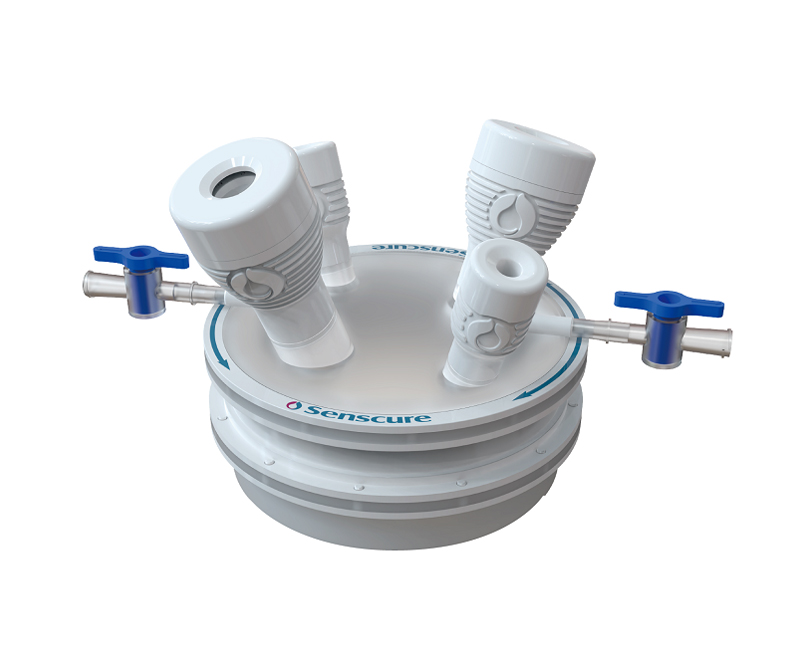
A multi-channel laparoscopic entry platform is a channel device installed at a single incision to simultaneously accommodate a laparoscope and multiple surgical instruments while maintaining the pneumoperitoneum environment. The platform typically consists of an incision protector, platform body, sealing membrane, and cannula assembly. Different products may use structures such as gel membranes, silicone membranes, fixed channels, or freely combinable cannulas.
When purchasing, key parameters to confirm include:
The number of configurable channels;
Whether the channel positions and directions are fixed;
Compatible instrument diameters;
Effective spacing between channels;
Sealing performance during instrument movement;
The connection method between the incision protector and the platform body;
Whether the platform can be disassembled or reinstalled during surgery;
Whether it facilitates specimen removal during surgery;
Whether it supports adding, removing, or replacing cannulas;
Whether it is suitable for single-port, reduced-port, or hand-assisted solutions. More channels do not necessarily mean more convenience. Excessive cannulas occupy platform surface space, increasing the risk of mutual interference between external instrument handles; insufficient channels may limit the simultaneous use of cameras, traction, and energy instruments. Cannula layout should be designed around actual operational steps rather than simply choosing the maximum number of channels. SensCure offers multi-channel laparoscopic entry platforms that can be combined around cannula numbers, positions, and directions, supporting single-port, reduced-port, and hand-assisted laparoscopic solutions. Selection should still consider incision size, instrument diameter, channel number, and specimen extraction needs, verifying the specific platform structure and matching specifications.
Instrument crowding refers to collisions and movement restrictions between external handles or internal instrument axes when the laparoscope and multiple operating instruments concentrate through the same entry route. Traditional multi-port laparoscopy can establish a triangular layout by dispersing puncture points, allowing two operating instruments to approach the tissue from different directions. In single-port entry, instrument axes are often more parallel, potentially creating a motion relationship similar to the "chopsticks effect": when the surgeon's hand moves to one side, the instrument tip inside the body may move in the opposite direction, increasing operational adaptation difficulty. Clinical literature points out that when multiple instruments pass through the same multi-channel port, instrument crowding, mutual collision, and insufficient triangular operation are likely to occur. These limitations are more pronounced in steps such as suturing, knot tying, deep traction, and those requiring continuous exposure.
Common influencing factors include:
The distance between laparoscope and instrument channels is too close;
Entry directions of straight instruments are highly parallel;
External handle size is relatively large;
Platform position cannot adapt to target tissue direction;
The incision is too small, limiting instrument movement;
Excessive resistance of the sealing membrane;
Leakage occurs when multiple instruments pass through simultaneously;
Lack of curved, steerable, or varying length supporting instruments. Solving these issues is not limited to increasing the number of channels. Internal channel layout, differentiated configuration of instrument lengths, use of curved instruments or oblique-viewing scopes, coordination proficiency of camera operators, and adding auxiliary puncture holes (i.e., reduced-port solutions) when necessary can significantly improve the actual operating space.
Choosing a surgical entry approach involves judging single-port, reduced-port, or multi-port solutions based on specific surgical methods, lesion locations, patient conditions, operational steps, and team experience.
Evaluation usually considers:
The location and operating range of the target organ;
Whether multi-directional traction is needed;
Inclusion of complex suturing, reconstruction, or lymph node dissection;
Specimen size and removal path;
Patient abdominal wall thickness and past surgical history;
Laparoscope and instrument diameters;
Need for energy instruments, staplers, or robotic instruments;
Familiarity of the team with single-port operations and cross-instrument techniques;
Ability to promptly add auxiliary channels or switch surgical methods.
Evidence from different surgical methods should not be directly extrapolated to other methods. For example, SAGES multi-society cholecystectomy guidelines recommend multi-port over single-port or single-incision laparoscopic techniques for cholecystectomy patients. This recommendation targets cholecystectomy and related safety outcomes and does not imply that single-port surgery is unsuitable for all departments or all surgical methods.
For medical device distributors and project purchasers, entry platform selection should be based on the already determined surgical methods, instrument combinations, and incision needs of the end medical institution, further verifying the specific model's channel configuration, applicable range, and target market access requirements, rather than having a specific platform dictate the clinical path in reverse.
Q: Does single-port surgery always involve only one instrument channel?
A: No. Single-port refers to the main abdominal wall entry being concentrated within one incision, which is usually equipped with an entry platform having multiple instrument channels.
Q: Are SILS and LESS completely different surgeries?
A: The focus of the two terms is slightly different, but they are used in a large number of documents to describe similar single-incision or single-port laparoscopic techniques. When reading research, check its specific entry definition.
Q: Why does single-port surgery easily lose triangulation space?
A: Because the laparoscope and operating instruments enter through adjacent channels, the instrument axes are more parallel, making it difficult to approach the target tissue from dispersed directions like in multi-port surgery.
Q: Is more channels on a multi-channel platform better?
A: Not necessarily. The number of channels should match the actual instrument configuration. Too many channels may increase platform crowding, while too few may limit simultaneous operations.
Q: What information is needed to procure a single-port entry platform?
A: Typically, the expected surgical method, incision range, instrument diameter, number of channels, platform material, specimen removal needs, and whether reduced-port, hand-assisted, or robotic instrument access is required should be clarified.
Single-port surgery, SILS, and LESS are commonly used to describe technical pathways for completing laparoscopic operations through a single incision. Compared to multi-port surgery, single-port entries reduce scattered puncture sites but also bring challenges such as instrument crowding, insufficient triangulation, view coordination, and pneumoperitoneum maintenance. The choice of multi-channel entry platforms should revolve around the actual surgical method and instrument combination. Incision size, cannula diameter, channel position, instrument movement space, specimen removal, and plan conversion capability will all affect whether a platform is suitable for actual operations. If you are evaluating entry platforms for single-port, reduced-port, or hand-assisted laparoscopic projects, you can provide SensCure with information on the expected surgical method, incision range, instrument diameter, required number of channels, and whether specimen removal or robotic instrument access is involved to facilitate smoother communication of platform structure and matching specifications.

 |
| 
 +86-574-63729798
 overseas@senscure.net
 Block B, Building 3, No.777 Binhai 4th Road, Hangzhou Bay New District, Ningbo 315336, Zhejiang Province, China